


This is one of the most common questions food service facility managers ask, and the answer depends entirely on the specific conditions your floor will face. Both epoxy and urethane concrete are massive improvements over bare concrete or tile. But they perform differently under different conditions, and choosing the wrong one for your specific environment means either overpaying for unnecessary performance or underpaying for a system that won’t survive your actual operating conditions.
High Performance Systems has been installing both systems in commercial food environments since 1988, and they know exactly where each material belongs.
What Is Thermal-Cured Epoxy and Where Does It Excel?
Thermal-cured epoxy is a premium floor coating system that bonds tightly to properly prepared concrete substrates and creates a hard, smooth, chemical-resistant surface. High Performance Systems specifically uses thermal-cured systems rather than moisture-cure alternatives because the thermal curing process creates a tighter bond and delivers significantly better long-term performance.
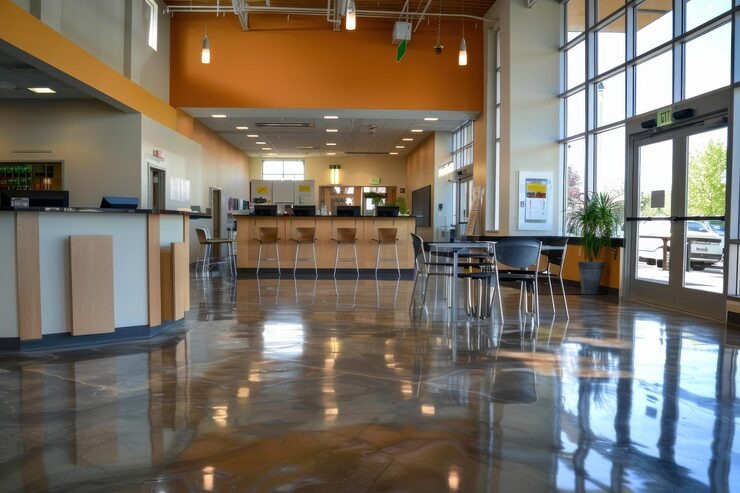
In commercial kitchens with moderate chemical exposure, regular foot traffic, and occasional equipment loads, thermal-cured epoxy delivers excellent results at a strong value. It’s also a practical choice for front-of-house dining areas when combined with decorative chip systems for visual appeal.
When Does Urethane Concrete Become the Right Choice?
Urethane concrete steps in when conditions exceed what epoxy handles comfortably. Specifically, thermal shock is the critical variable. When floors face rapid temperature swings from hot water steam cleaning, urethane concrete’s flexibility allows it to expand and contract without cracking. Epoxy, being harder and less flexible, can crack under the same conditions.
A certified urethane concrete contractor will assess your specific washdown protocols, chemical exposure profile, and traffic loads before recommending one system over the other. That assessment is what separates a floor that lasts from one that fails early.
How Does Each System Handle Organic Acids?
Organic acids from meat processing, dairy production, fermentation, and produce handling are among the most corrosive substances food facility floors encounter. Both urethane concrete and epoxy offer chemical resistance, but urethane concrete provides a meaningfully higher level of acid resistance that’s better suited to environments with constant exposure to these substances.
For proper food service flooring in meat processing, dairy facilities, or brewery environments, urethane concrete is almost always the appropriate specification. Epoxy is the right call in lower-acid environments like dry storage, dining areas, and facilities with less aggressive chemical profiles.
What About Slip Resistance in Wet Environments?
Slip resistance in wet conditions is a safety-critical requirement for food facilities. Both systems can be finished with aggregate textures that provide the traction needed during wet operations, but the right texture profile depends on the environment. Heavy production areas need more aggressive texture. Food prep areas balance traction with cleanability. Dining rooms prioritize smooth, attractive finishes.
Proper food and beverage flooring is specified with the correct surface texture for each zone of the facility, not installed as a uniform system across areas with completely different requirements. This zoned approach is a mark of experienced contractor work.
Real-World Example: Commissary Kitchen Comparison
Consider a large commissary kitchen serving a regional food distribution operation. The production floor where cooking, processing, and packaging occurs sees constant hot water exposure, frequent spills of acidic sauces and marinades, and heavy cart traffic. The adjacent cold prep area sees lighter traffic and lower temperatures. The dining and administrative areas see foot traffic only.

High Performance Systems would typically specify urethane concrete for the main production floor, thermal-cured epoxy for the cold prep zone, and epoxy chip flooring for the dining area. Three systems, each engineered to match its specific zone conditions. That’s what professional facility flooring looks like in practice.
Why Certification and Experience Matter for This Decision
The material decision is only as good as the installation behind it. Surface preparation, mixing ratios, application temperature, cure time management — all of these variables determine whether the installed floor performs as specified or fails prematurely. Certified industrial contractors with decades of food environment experience manage all of these variables correctly.
High Performance Systems exclusively serves the commercial and industrial marketplace across NJ, NY, and PA. Their experience since 1988 means they’ve encountered every facility type and failure mode, and they bring that knowledge to every specification recommendation they make.
FAQs
Is urethane concrete more expensive than epoxy? Urethane concrete typically has a higher installation cost than standard epoxy systems. However, in environments with thermal shock and heavy acid exposure, its superior durability and extended lifespan make it the more cost-effective choice over time.
Can epoxy and urethane concrete be used in the same facility? Yes. Many large food facilities use both systems in different zones, with urethane concrete in high-stress production areas and epoxy in lower-stress or front-of-house areas.
Who should I contact for a food facility flooring assessment in NJ, NY, or PA? High Performance Systems offers free estimates for industrial and commercial flooring projects and can be reached directly at 800-928-7220.


